En-suites in guest houses
Moffat’s guest houses are where en-suites get added to big Victorian bedrooms, often several at once. The hard part is rarely the size of the room. It’s getting the waste from the far side of a bedroom to the stack without a step up into the en-suite, or pipework boxed across a cornice. So the layout is planned around the drainage, and the joists it has to run with or across, before anything else. Sometimes a raised floor or a macerator is the honest answer, and we’ll say so.
For a business, timing matters as much as the work. Most owners want en-suites done in the quiet months. If that’s you, talk to us well before the season ends, so the rooms can be planned and materials ordered in time.
Period doors and tall rooms
Victorian villas have high ceilings, deep skirtings and doors that don’t match today’s standard sizes. A modern door won’t fit an original opening without heavy cutting or a change to the lining. Often the better job is to keep the original panelled doors: ease the edges, fit new hinges and get them closing properly again. More on that on our internal doors page.
Hill weather
Moffat sits higher than Dumfries with hills on every side, and its winters are colder. A house heated hard when it’s full and left cool when guests are away sees big swings in humidity, and timber moves with them. We leave a proper expansion gap on wood floors and seal every face of trimmed doors, which matters more here than in a house kept at one steady temperature.
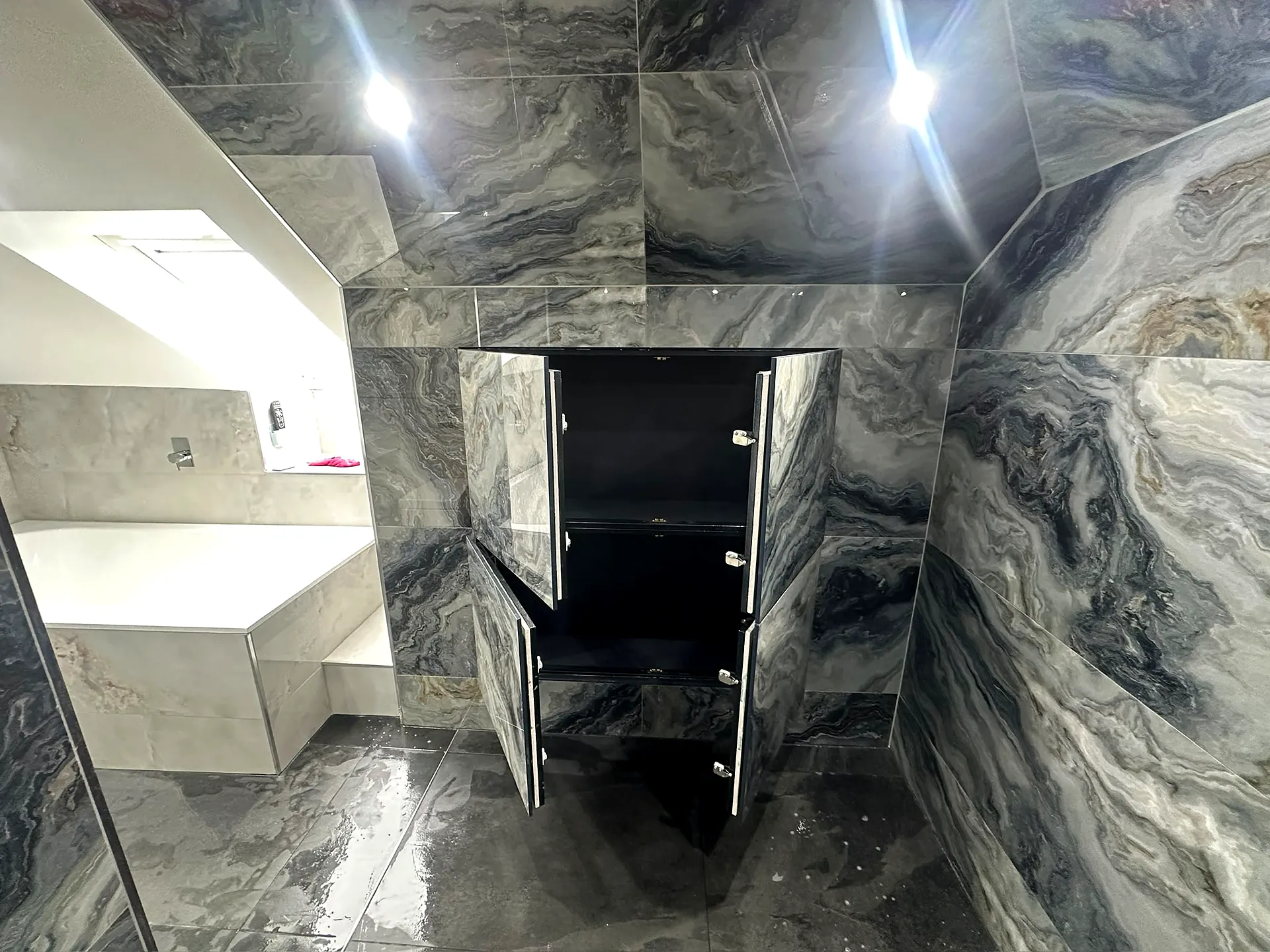
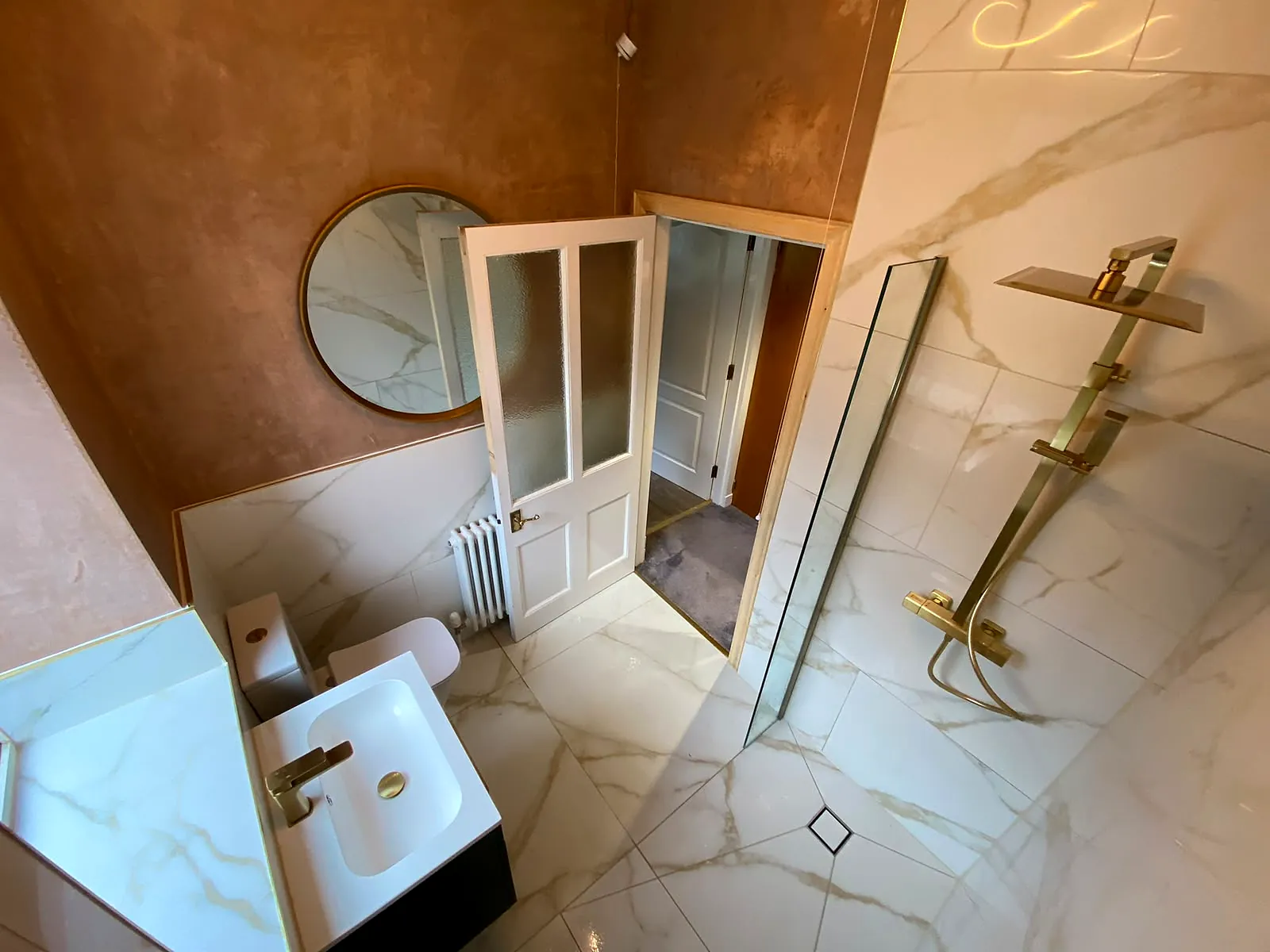
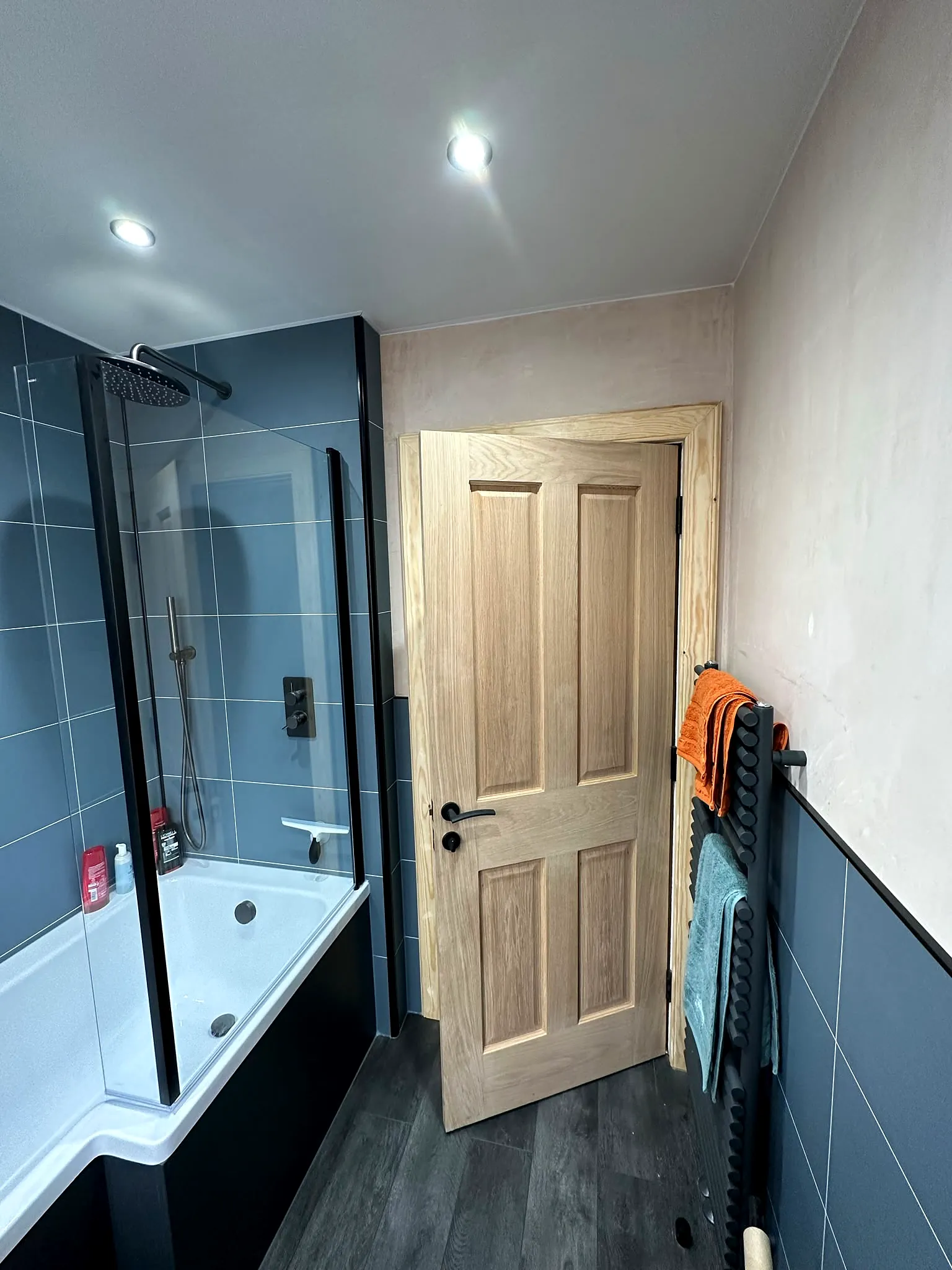
Some of our recent work
Questions from Moffat
Can you fit several en-suites over one quiet season?
That depends on how many rooms and how long you close for. Tell us both early and we’ll be straight about whether it fits.
Should I replace the original Victorian doors?
Not usually. Original panelled doors are solid timber and almost always worth rehanging. New ones rarely look right in a period house.