Setting out
We find the centre of the wall or floor and dry-lay a row before anything gets mixed. Starting square from a corner is how you end up with a 10mm sliver at the doorway or down the side of a window, the two places everyone looks. Setting out from the middle, or from a fixed line like the bath edge, keeps the cuts even at both ends.
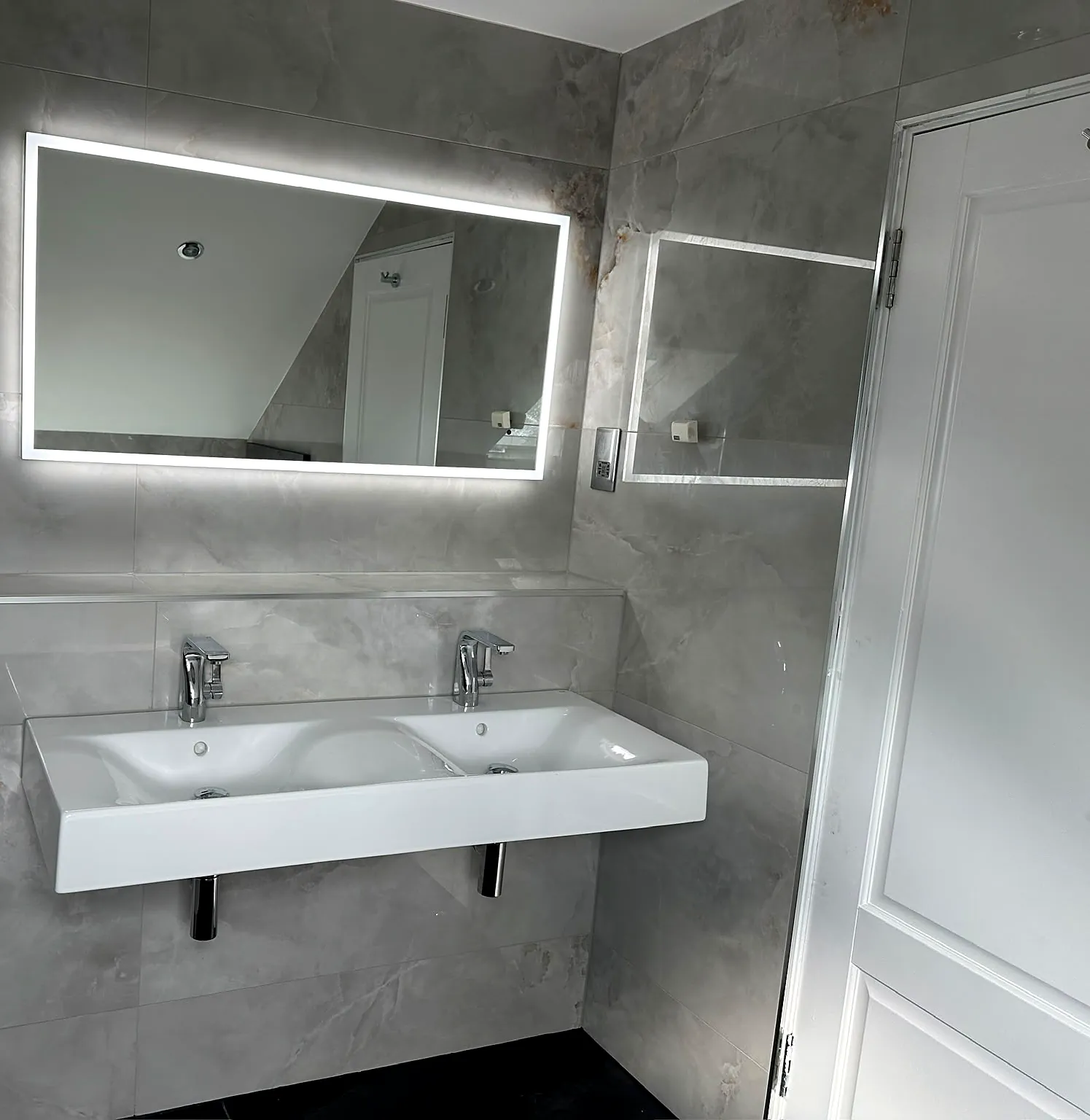
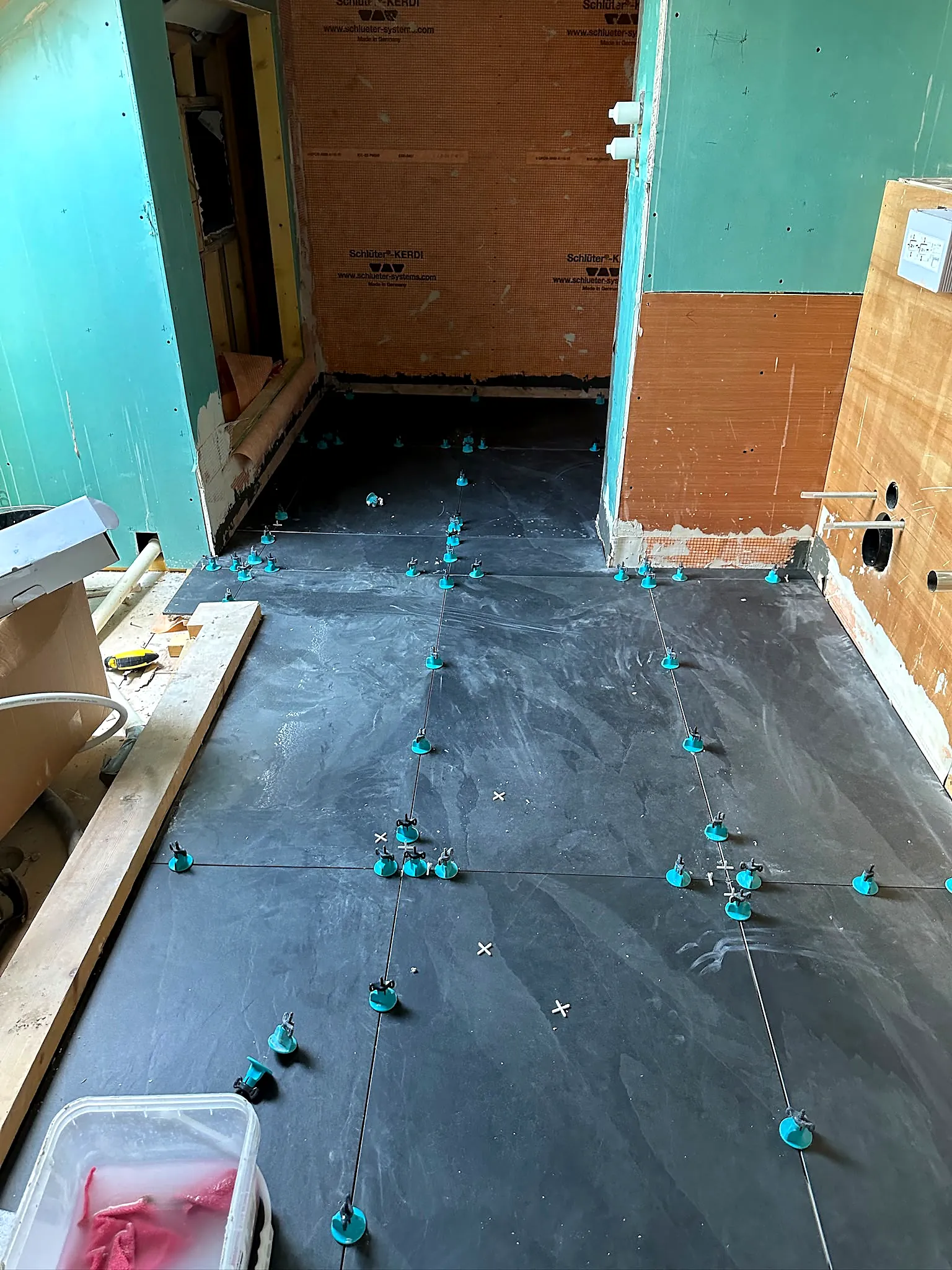
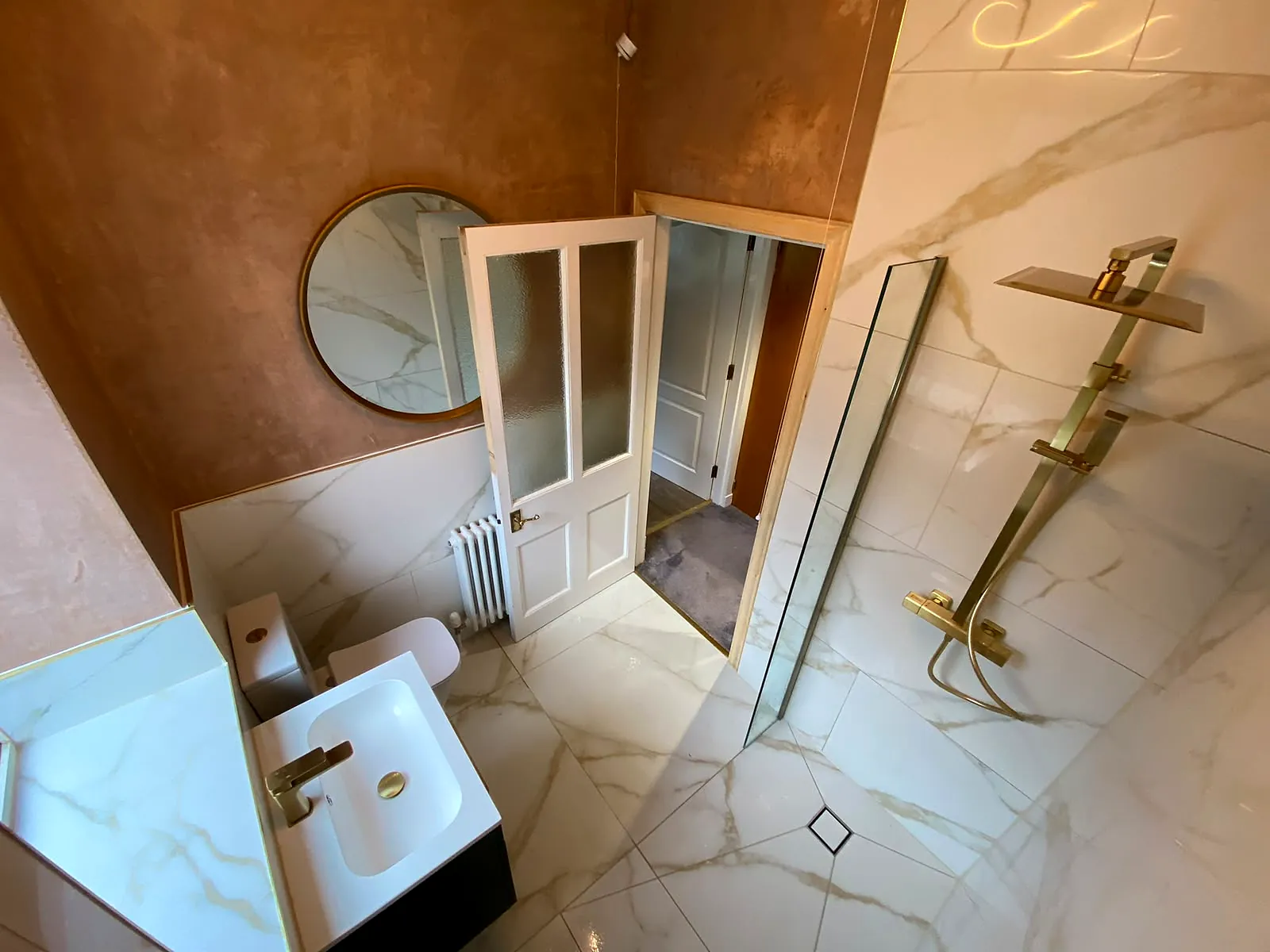
Large-format tiles, 600mm and up, show every dip in the surface. We check with a long straightedge first and use levelling clips on floors, so neighbouring tiles finish flush with no lipped edges to catch a sock on.
What the tiles go on
- Timber floors flex. Tiles stuck straight onto floorboards crack along the board lines. We overboard with tile backer board or ply, screwed down at close centres, and use a flexible adhesive.
- New plaster must be dry and primed first. Cement-based adhesive on unprimed gypsum plaster can lose its grip and let tiles come away in a sheet.
- Painted walls are keyed or stripped, so the adhesive bonds to the wall and not to a skin of emulsion.
- Concrete floors are checked for damp, especially on ground floors in older houses.
Porcelain, ceramic and stone
Ceramic wall tiles are the forgiving ones: light and easy to cut. Porcelain is far denser. It needs a wet cutter and a polymer-modified adhesive, and it’s what we’d put on a busy hall or kitchen floor. Natural stone such as slate or travertine needs sealing before grouting, or the grout stains its face for good.
Grout, silicone and movement
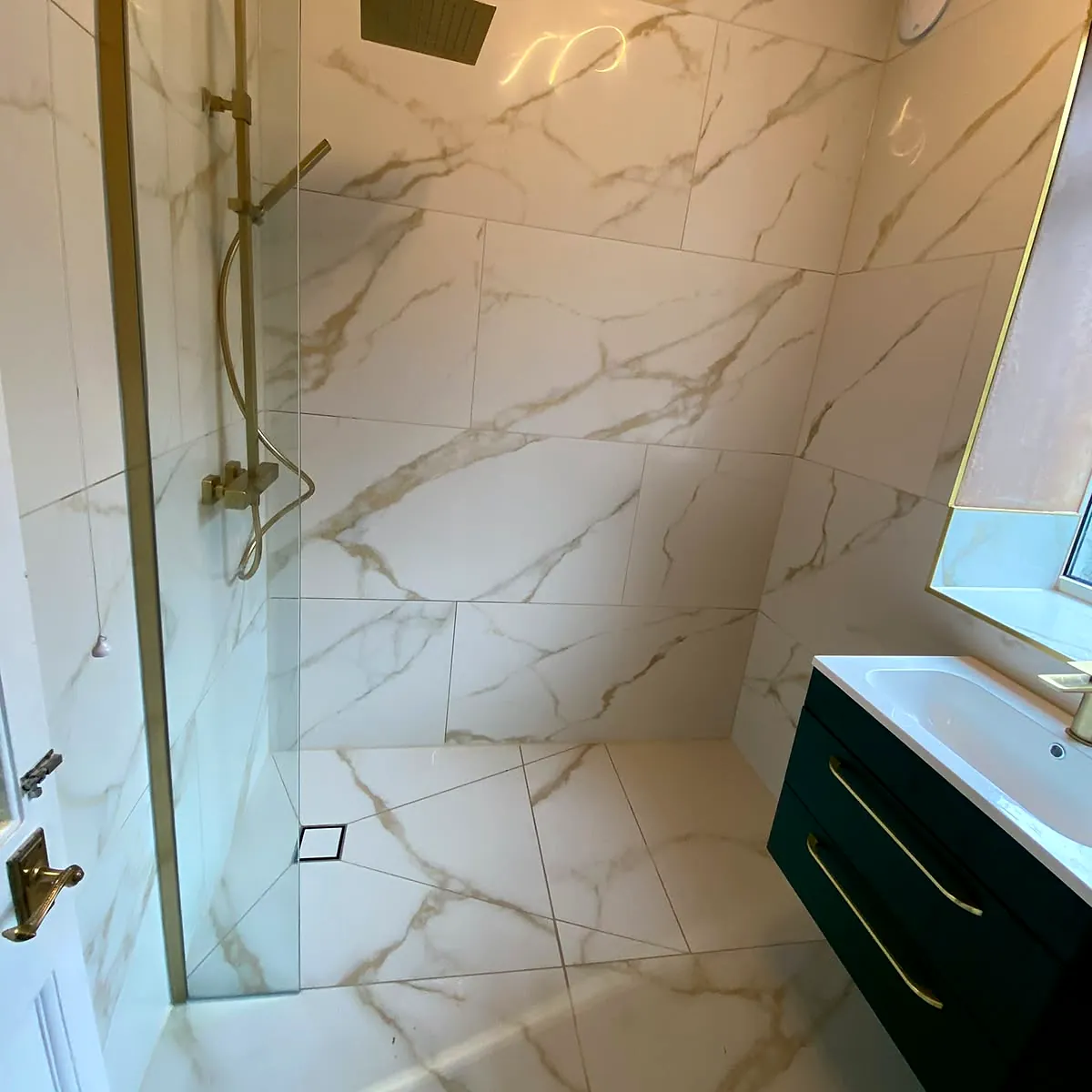
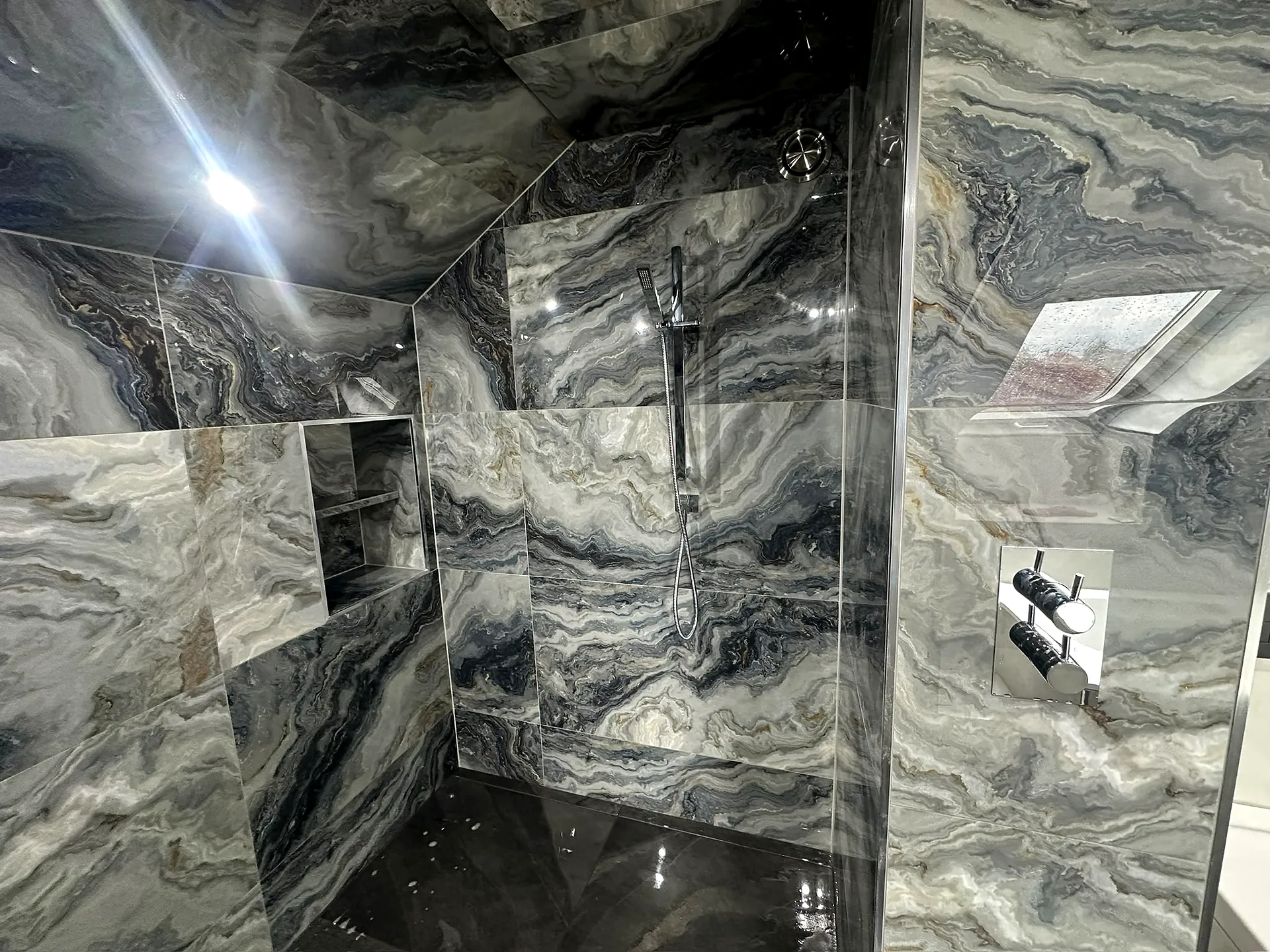
Where a wall meets a floor, or tiles meet a bath, the two surfaces move separately. Those joints get flexible silicone, never grout, which would just crack out within months. The same goes for internal corners in a shower.
Tiling on its own
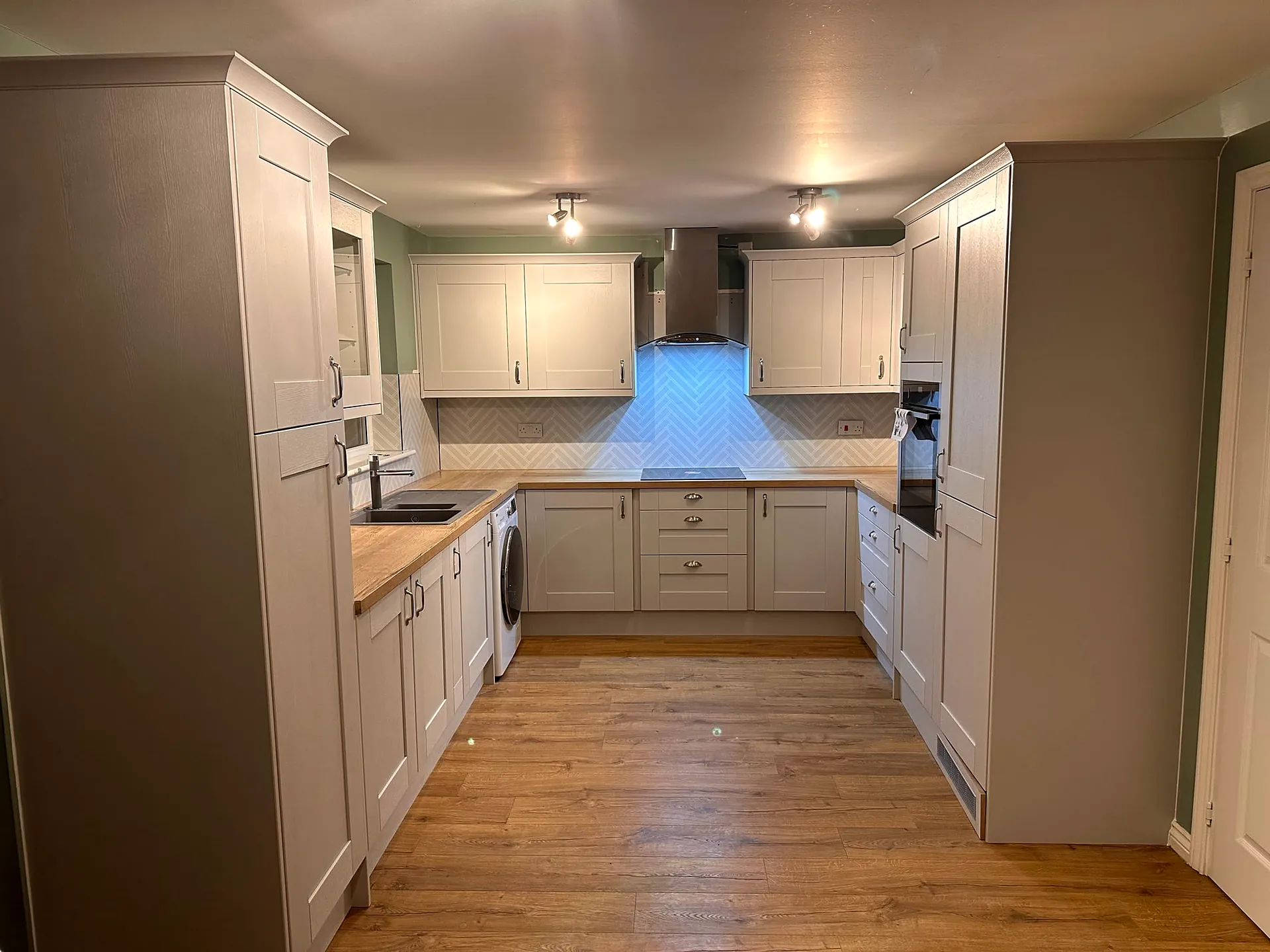
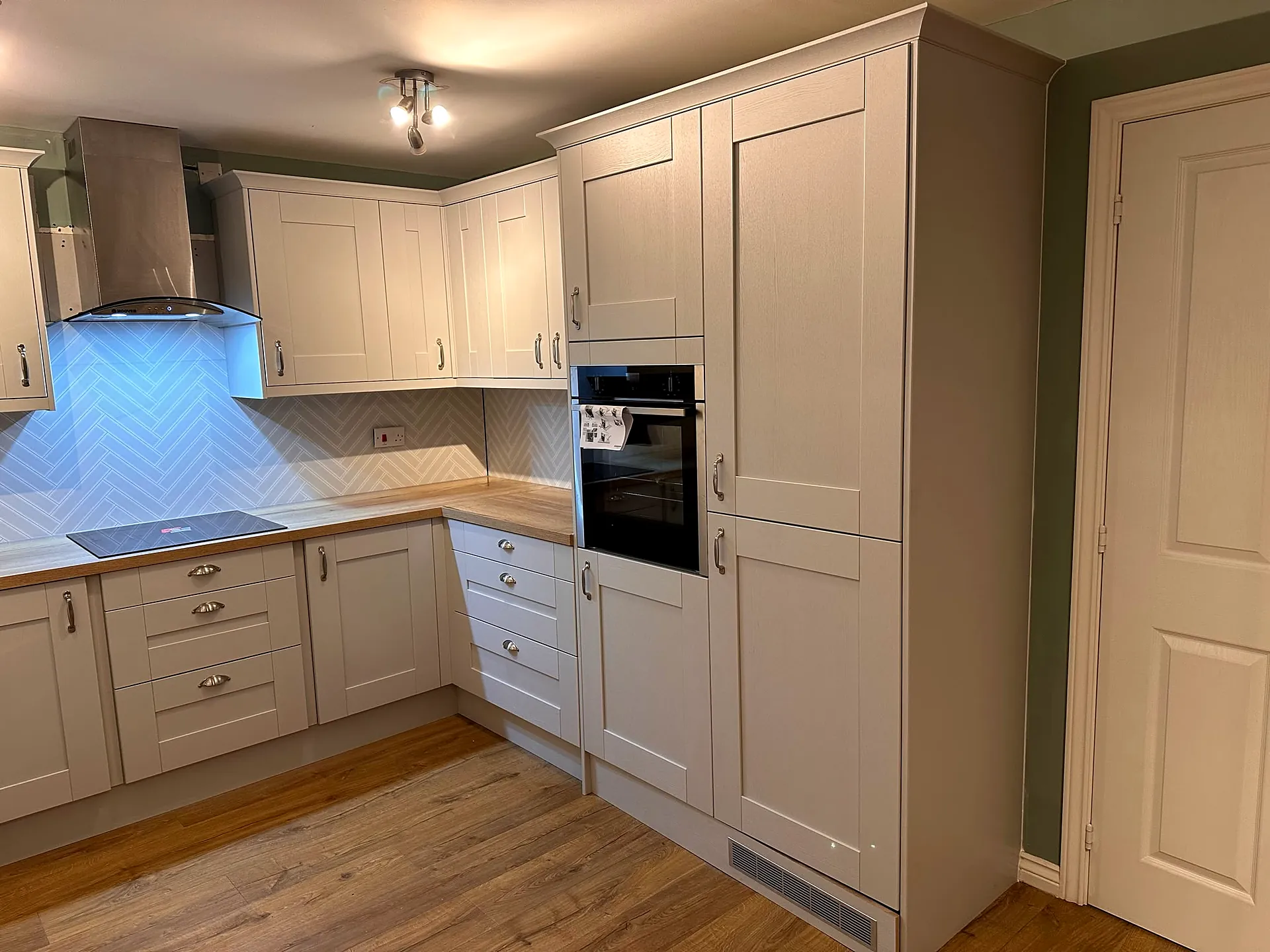
We don’t need to have fitted the room. We tile splashbacks behind new worktops, hall and kitchen floors, and whole bathrooms where the plumbing has been done by someone else. If it’s part of a bigger job, see kitchen fitting or bathroom renovations.
Recent work
Common questions
How many spare tiles should I order?
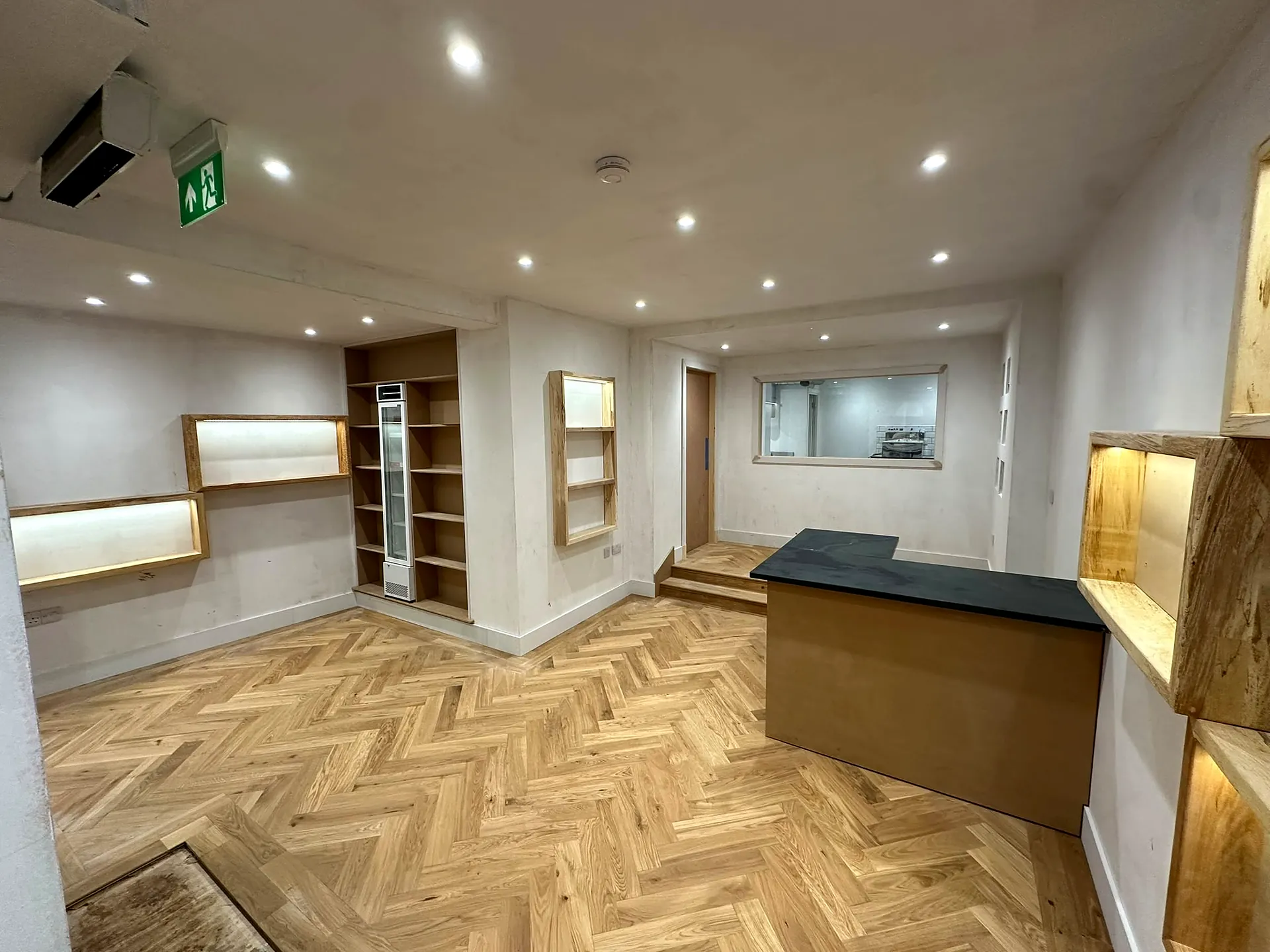
About 10% over the measured area for a straight lay, nearer 15% for diagonal or herringbone, which means more cuts. Keep a few after the job. Ranges get discontinued, and a cracked tile is hard to match later.
How soon can we walk on a new tiled floor?
That depends on the adhesive. Standard adhesive needs around a day before it’s walked on and grouted; rapid-set is ready in a few hours. We’ll tell you which we’re using and when the room is back in use.